
Remembrance Photographer
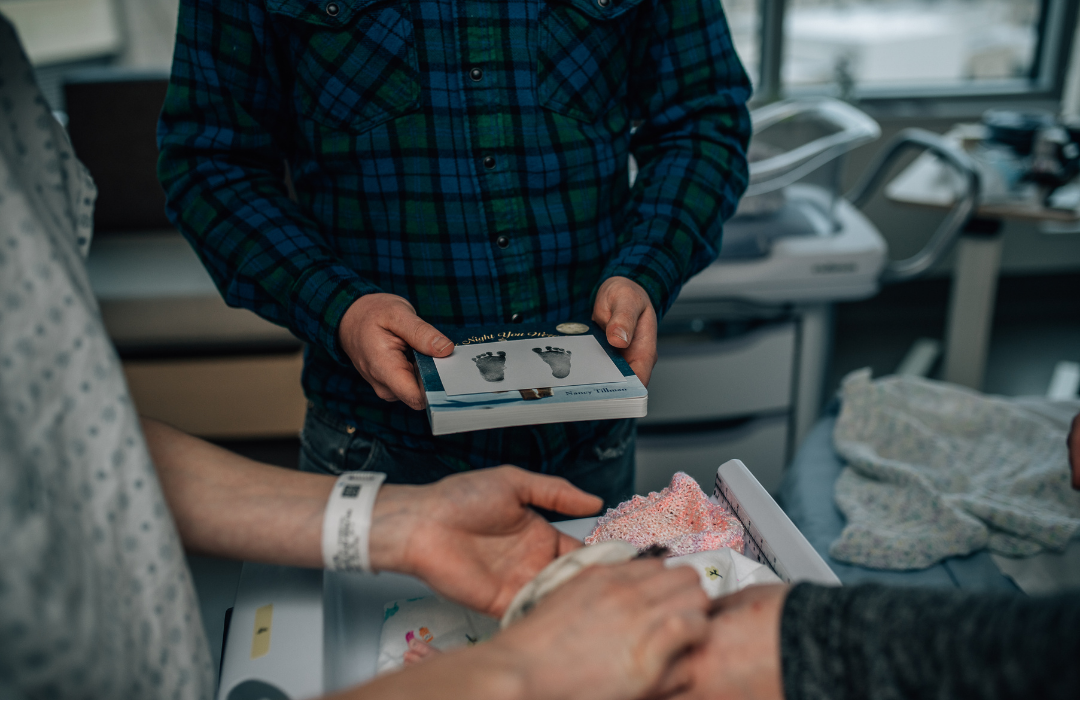
Creating tangible memories of a baby or child whose time here was far too short.

The Role
Remembrance Photographers provide professional remembrance photography for families experiencing pregnancy, infant or child loss.
Every session is different.
The environment may be quiet or busy. Lighting and available space may be difficult. A baby may have been born very early or have visible physical or medical complexities. A child may be surrounded by medical equipment. Parents and family members may want to participate fully in photographs, or they may not be ready to be photographed at all.
A Remembrance Photographer must be able to adapt.
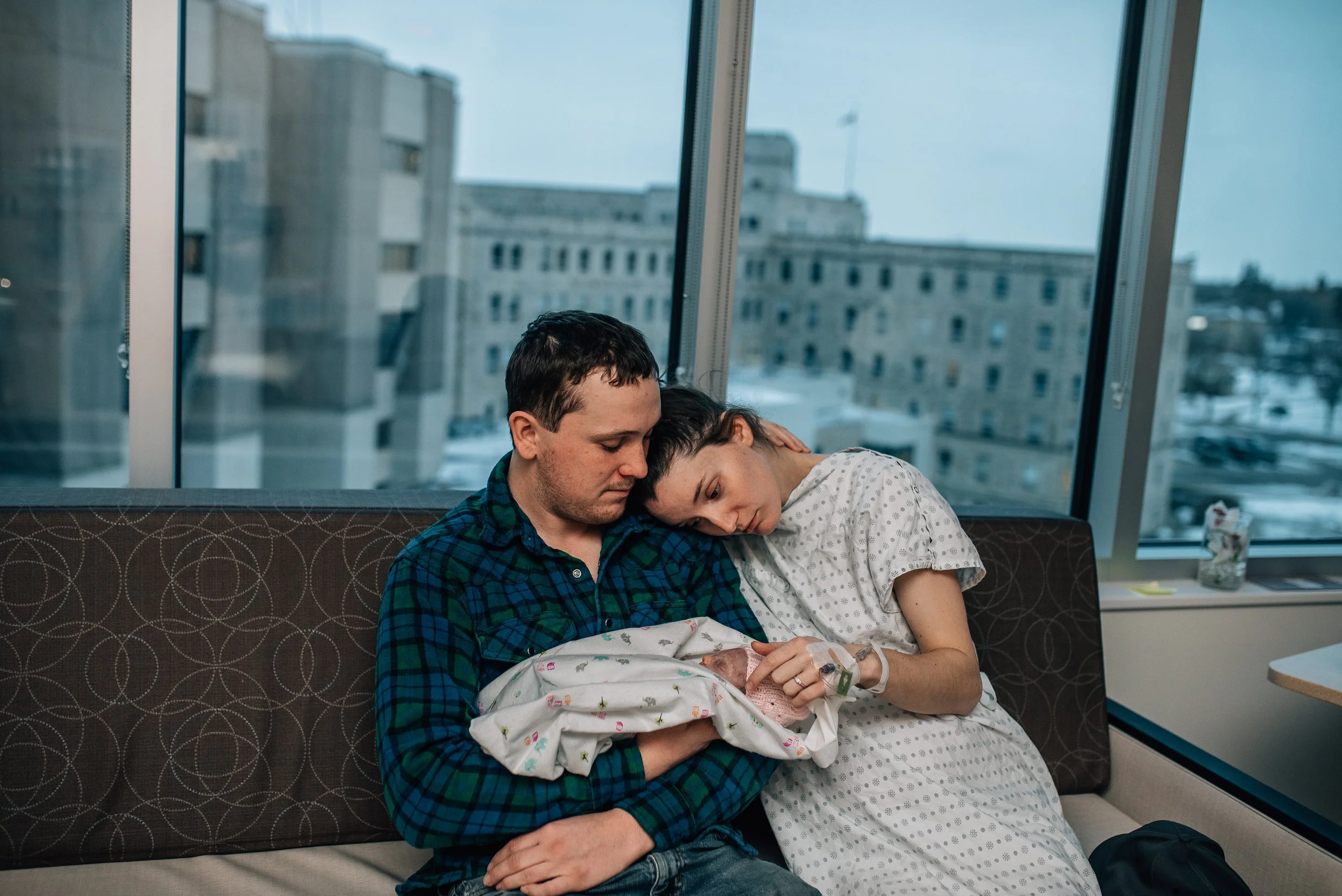
The photographer's role is to document a family's baby or child and the moments surrounding them with sensitivity and respect, while following the family's lead and working within the circumstances of the space.
These photographs aren't simply about creating a technically beautiful portrait.
They preserve details.
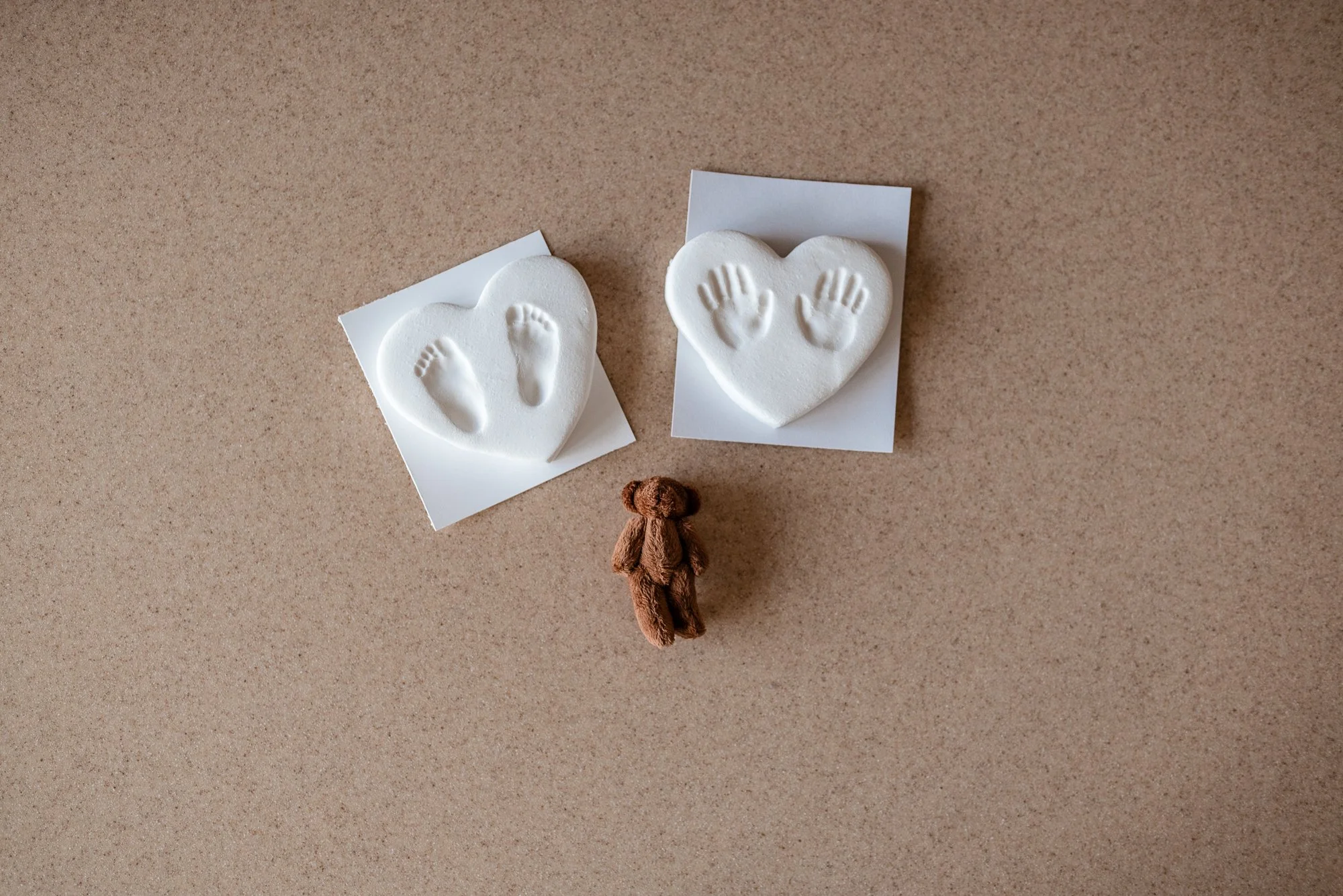
Tiny hands and feet. A curl of hair. A profile. The way a parent held their baby. Siblings together. A hand wrapped around a finger. The physical evidence of a little person who existed and was deeply loved.
There is no opportunity to recreate these moments later.
That responsibility is at the heart of remembrance photography.

What We Look For
-
Remembrance photography often happens in environments that were never designed for photography.
Photographers need to be confident operating their camera manually and capable of producing consistent, professional-quality images in changing or challenging conditions.
Strong candidates demonstrate competency in:
Manual camera operation
Exposure, focus and composition
Working in difficult or inconsistent lighting
Photographing people and small details
Adapting quickly to different spaces and circumstances
Professional image selection and editing
File organization and management
Producing a consistent finished gallery
Technical decisions need to become second nature enough that the photographer can remain attentive to the family and what is happening around them.
-
The person behind the camera matters just as much as the camera itself.
Remembrance Photographers must be comfortable entering spaces where people are experiencing profound grief.
They need to communicate gently, move through the room respectfully and recognize that the family's experience is more important than getting a particular photograph.
The goal is never to turn a family's loss into a photography session.
The photographer is there to document what matters while allowing the family to remain at the centre of the experience.
-
Some of the most important decisions a Remembrance Photographer makes happen before the shutter is pressed.
Photographers must continuously read the room, follow the family's lead and use sound judgement about what is appropriate in each moment.
Sometimes that means recognizing an opportunity to preserve a detail a family may not realize they will want to remember.
Sometimes it means waiting.
Sometimes it means lowering the camera entirely.
Not every meaningful moment needs to be photographed.
Understanding that distinction is an essential part of this work.
-
Remembrance photography can involve circumstances that are emotionally and visually difficult.
Photographers may encounter very premature babies, medical equipment, physical changes following death, or families experiencing intense and immediate grief.
Photographers must be able to remain calm, respectful and attentive while continuing to perform their role.
Being emotionally steady does not mean being unaffected by what you witness.
It means having the self-awareness to recognize your own response without requiring the family to manage it for you.
-
dignity.
Photographers must be able to approach babies and children with tenderness and respect regardless of gestational age, medical condition, physical appearance or circumstances surrounding their death.
The goal is not to hide the reality of a child's story.
It is to photograph them as someone who mattered.
Someone who belongs to a family.
Someone who is loved.
-
Every family approaches death, grief, memory-making and photography differently.
Some families may want many photographs. Others may want only a few.
Some may want to hold, dress, bathe or interact with their baby or child while being photographed. Others may prefer photographs of their child alone.
Photographers must be able to respect those choices without imposing their own ideas about what a family should want or how grief should look.
There is no single correct way to create memories after loss.
-
Remembrance Photographers are trusted with extraordinarily private moments and images.
Photographers must understand and maintain strict confidentiality, respect family consent and follow Empty Arms policies for the handling, storage, editing and delivery of photographs.
Images created through this work belong to a family's story.
Their privacy must be treated accordingly.
-
Requests for remembrance photography are often time-sensitive.
There may be a limited window in which photographs can be created, and sessions cannot simply be rescheduled for another day.
Photographers working on call must be dependable, responsive and prepared to attend when they accept an assignment.
Families may only have one opportunity for these photographs.
Reliability matters.
-
This work can stay with you.
Photographers need to recognize their own emotional limits, understand when they need support and be willing to ask for it.
There may also be circumstances or particular calls that a photographer is not emotionally able to accept.
Recognizing that is not a failure.
Self-awareness is part of providing responsible, sustainable care to families.
-
Photography Standards & Preparation
We do not expect every applicant to have experience specifically in bereavement photography.
We do expect applicants to bring strong foundational photography skills, professionalism, compassion, sound judgement and a willingness to learn.
Remembrance photography requires photographers to apply their technical skills in circumstances that can be unpredictable, emotional and unlike a traditional photography session.
Empty Arms provides photographers with the preparation, processes and expectations necessary to understand how remembrance photography fits within the broader support being provided to a family.
The goal isn't simply to create beautiful photographs.
It's to create meaningful photographs while ensuring that the experience of creating them is respectful, compassionate and centred entirely around the family.

The Commitment
Remembrance Photographers work on a casual, on-call basis.
Companions are currently asked to commit to a minimum of four on-call shifts per month.
Day Shift
8:00 AM – 5:00 PM
Night Shift
5:00 PM – 8:00 AM
Empty Arms typically supports approximately 5–15 families per month in hospital. Being scheduled on call does not necessarily mean you will be called to attend a family.
What it does mean is that, during the shifts you commit to, you are part of the team making sure someone is available when a family needs us.

Beyond the Job Description
We can describe the technical requirements.
Camera skills. Composition. Editing. Reliability. Confidentiality. Judgement.
But those things only explain part of what it means to be an Empty Arms Remembrance Photographer.
They don't explain what it feels like to pack your camera bag knowing where you're going.
To quietly enter a hospital room and meet a family for the first time.
To notice the details that might otherwise disappear with time.
Or to understand that the photographs on your memory card may someday become some of a family's most treasured possessions.
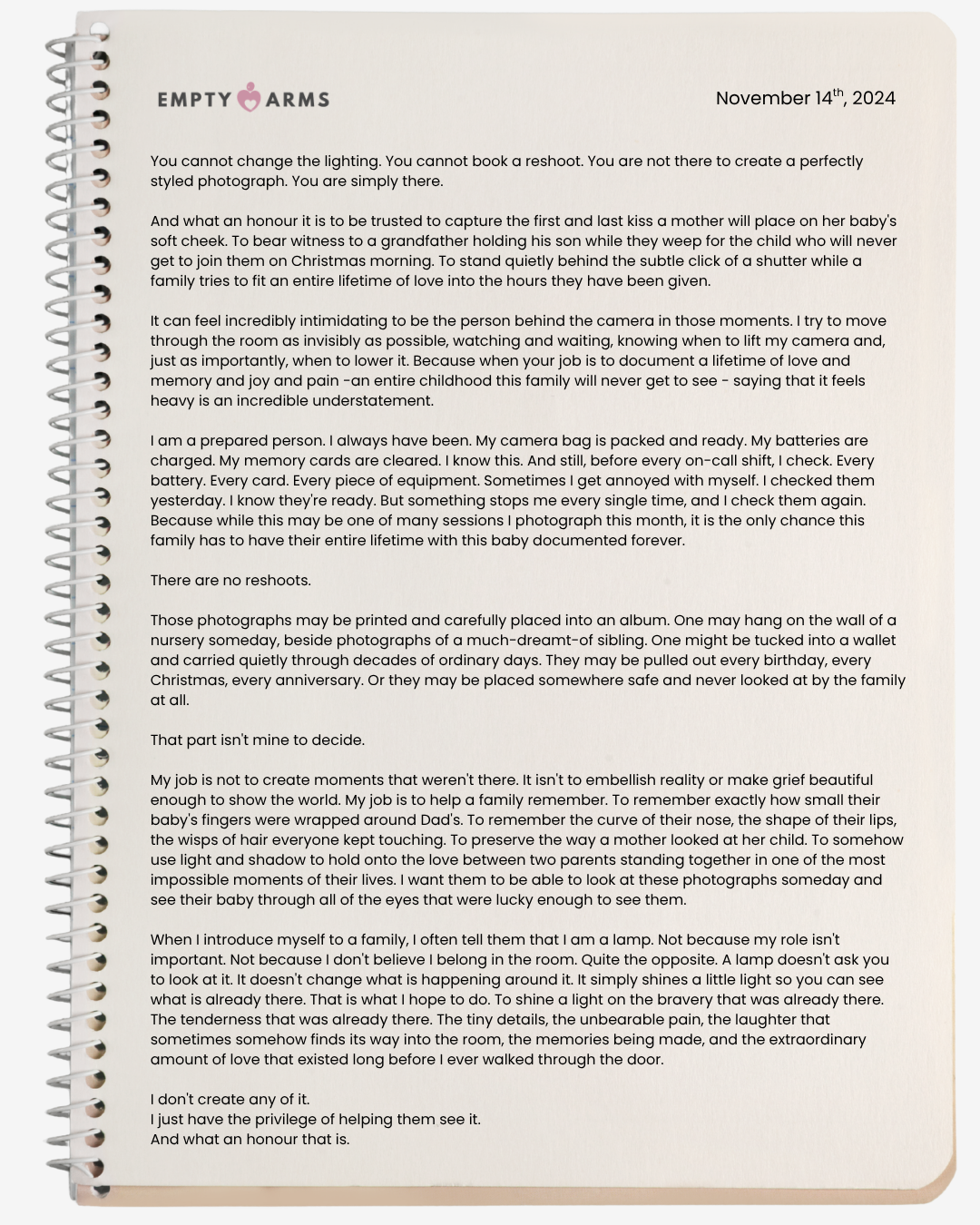
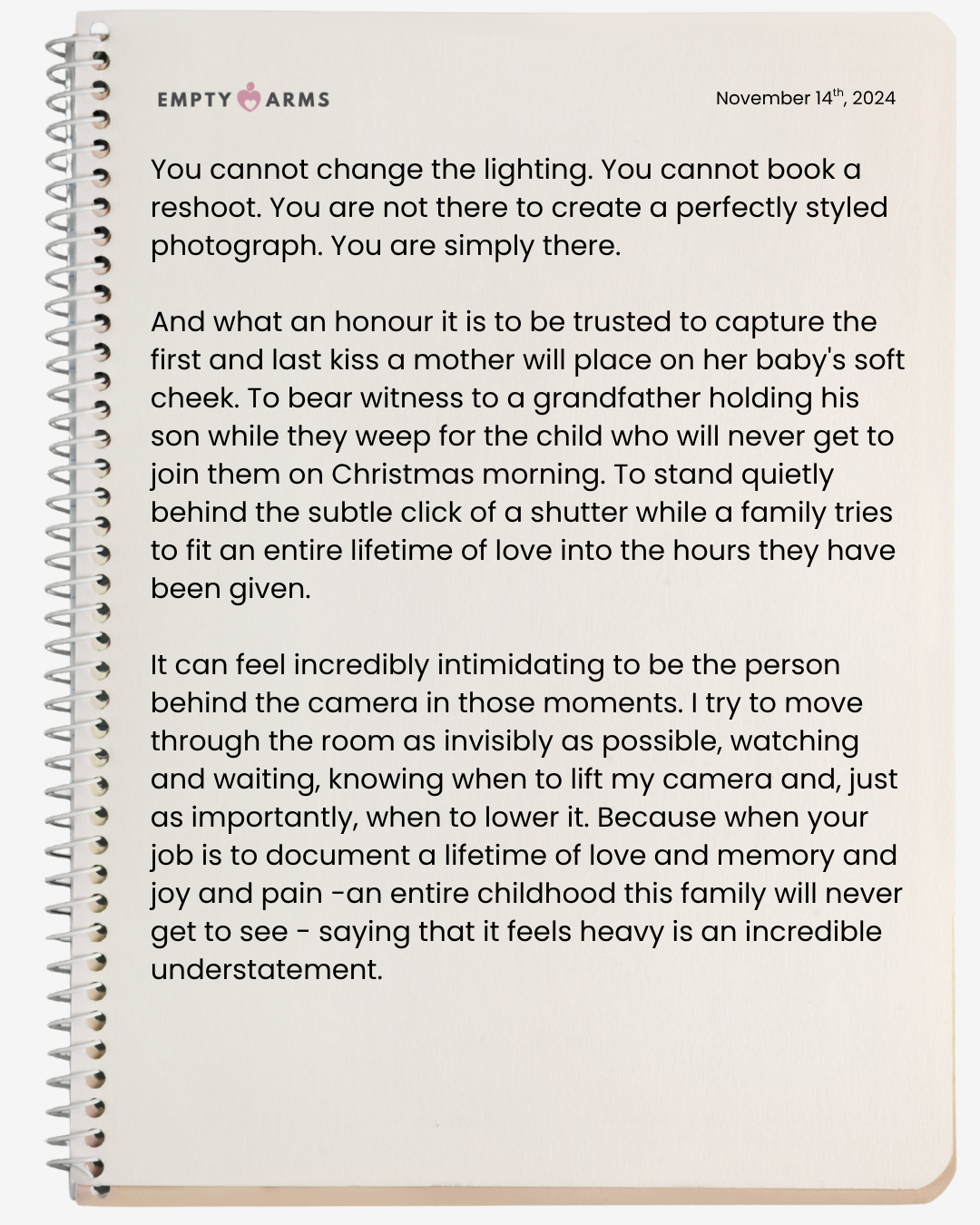
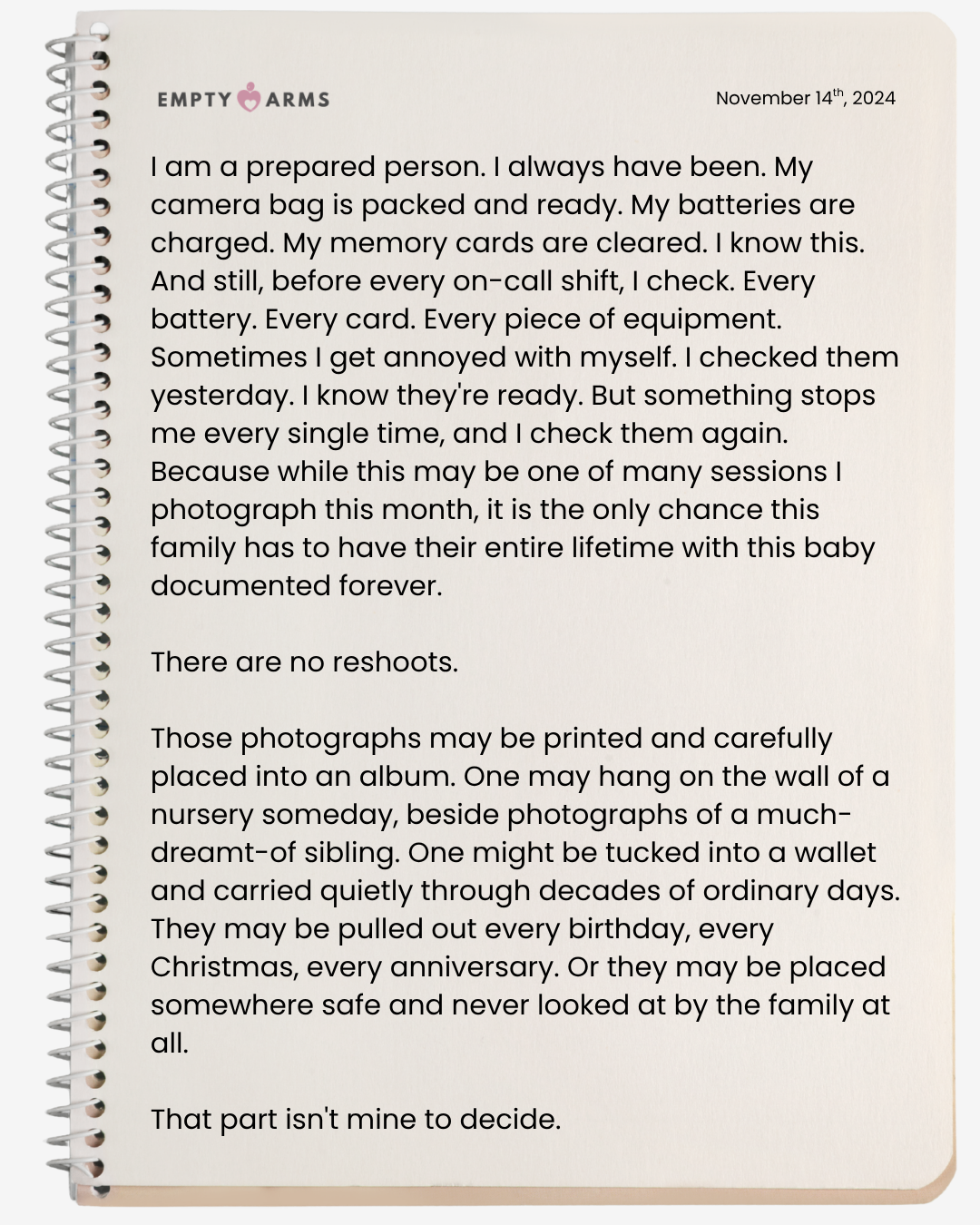
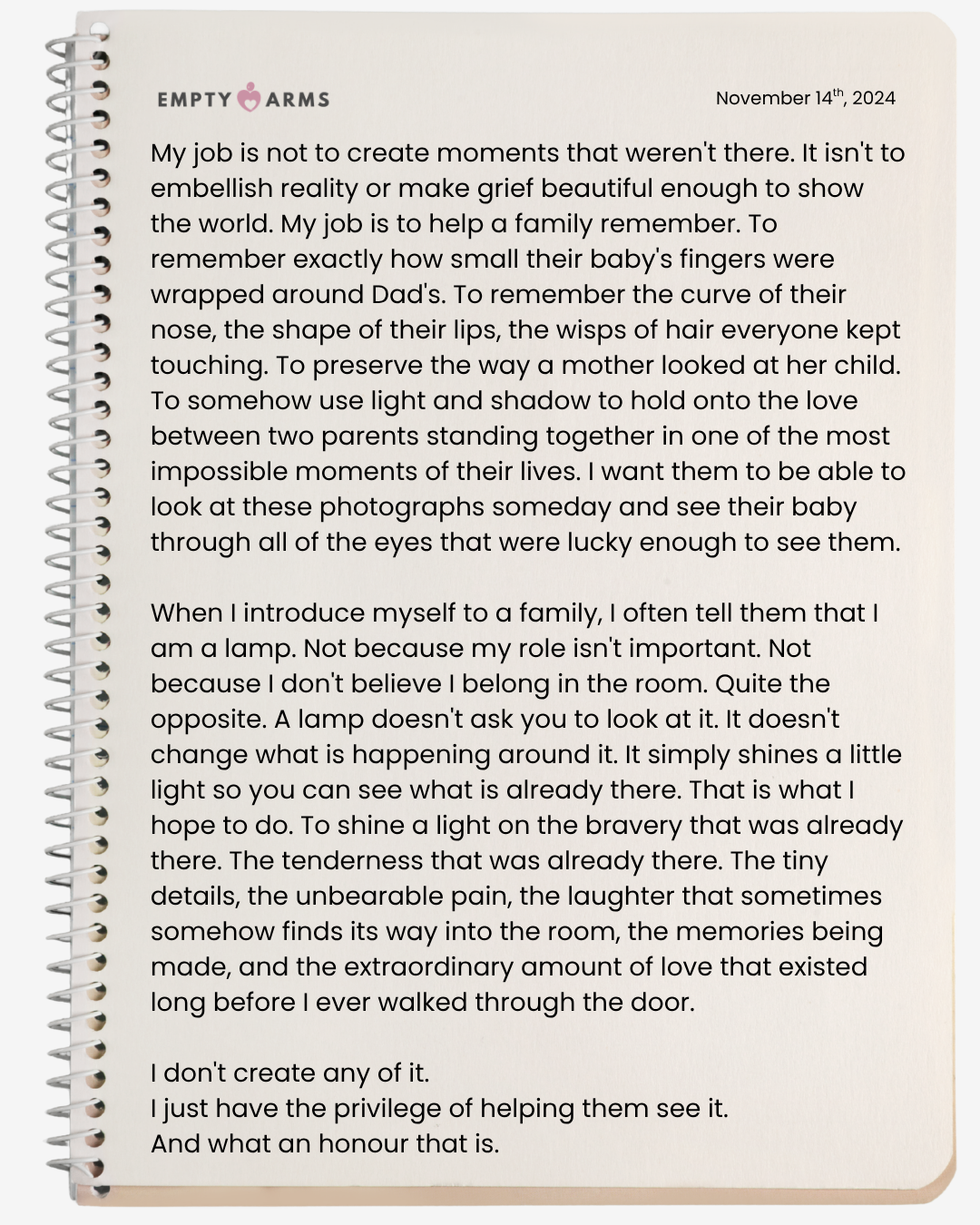
So we asked one of our Remembrance Photographers to tell you about the role differently.
Not as a photographer describing their work.
As someone who has stood behind the camera in that room.

Think you’re a good fit?
Fill in the form below and we will reach out to you: